A Cold Night in Albert Juhl’s Bean Field.
 “It’s coming.” I said facing the windshield, avoiding his eyes.
There was no reaction from the uniform in the booth. A snowflake bounced down my truck’s windshield, stuck to the heated glass and bled out. The American side of the border was sliced by search lights. Specks of snow fell through their glare, glistened and flitted, brilliant one second, gone the next.
My hands rubbed the truck’s sticky steering wheel. I tried to act casual. I studied the empty field beyond the lights, my eyes searching the black sky for more snowflakes, and finding them.
“The weather channel says tonight,” I went on brightly.
The black uniform clattered at his terminal.
“When you get a blizzard, do you put up a sign that says, The United States is Closed?”
The Customs Agent’s lips moved a little.
I prattled on. “I saw that in Miami once. A hotel on the beach put up a sign that said The Ocean Is Closed.” The only sound was the soft clatter of keyboard chicklets.
I decided to shut up. A friend once made a smart-ass remark to a Canadian Border Guard. Three hours later, after his car, suitcases, and wife were thoroughly searched, questioned, and humiliated, he was a changed man.
I returned to my original position and made a show of being interested in the sky and the possibility of snow. The suspicion of guilt by some uniform is enough to worry honest people. Real psychopaths don’t give a damn.
I waited, silent.
“Business or pleasure?”
My marriage had failed. I had to sell my house. I lost my life savings. My self-respect was destroyed. My extended family had spent the last year lowering their voices when I was around like ‘a death of a family’ was a communicable disease.
I was escaping. Going anywhere that wasn’t here. Maybe I should have told him that a mid-western voice on the phone had offered me a $15,000 boat for $2,100 and with it, a glimpse of freedom.
Maybe I should have told the uniform that for the first time in decades I wasn’t doing for someone else. That this wandering all over the United States was going to be for me, just me. To heal the wounds.
“Pleasure.” I answered.
There was another long silence after Mount Rushmore finished tapping his keyboard. He handed back my passport and gave a final nod.
There were three cars in the motel’s parking lot in Clear Lake Iowa, when I finally pulled in. My truck made four. I stretched and looked around. Iowa after midnight. I checked my watch. It was a lot after midnight.
According to the radio the snowstorm I had been watching had veered north.The motel’s parking lot was black punctuated with regularly spaced white circles from the parking lot’s streetlights.
A solitary semi-trailer whined down the interstate behind the motel. The warbling of eighteen wheels snapped quiet as the truck disappeared behind the motel, emerging seconds later. Its high whine faded away south. My ears echoed from the memory of my truck’s motor and the radio playing too loud for too long. My ears rang.
The beautiful black night made me shiver. I could see every star crackling in the black.
If it was possible that a building could smell tired of the world, that motel’s lobby in Clear Lake Iowa, was it. The clerk glanced at my credit card.
“Where from?”
“Winnipeg.” I was still close enough to Canada that I didn’t have to add, “500 miles north of Minneapolis.”
“Cold up there?”
“About the same. Except when it gets cold up there, it stays cold.”
Why do Canadians brag about their weather and make the cold colder, the mosquitoes bigger, the distances further?
“Yep. I live in Canada where it’s as cold as the hair around a polar bear’s ass! Canada, where the first snowfall is Halloween and the last one is Easter.”
I think we want to feel we are pioneers, a tougher race than our southern, softer relatives. We live in an outpost, because we like it. Talking about our hardships also makes us sound like rubes, America’s country cousins. Those nice people who live in the attic, but whom they suspect are missing a chromosome.
“Heading south for the winter?”
“For starters.”
The clerk searched my face. He must have thought better about asking more and returned to his computer.
“I might have some business in Florida, or California.”
For the second time tonight I watched as some quiet man clacked away on a computer.
I looked around at the lobby. The ancient hotel desk had been installed about the same time the Beatles broke up. The first layer of grime would have been cleaned about the time that The Donny and Marie Show was cancelled. The black and red carpet had been re-laid about as many times as The Flying Nun.
But the motel had one great advantage. This lonely outpost of light was the only motel open for the last forty-five minutes. The clerk’s head was bowed. He filled out the forms.
“You like working nights?”
His shoulders shrugged. He never looked up. “Nobody bugs me.” He spoke into the registry.
He was a Kabloona. When the Inuit in Northern Canada saw their first white man, they tried to describe him to the other Inuits. The Inuits looked at this strange, fish-belly white, noisy, smelly intrusion with huge eyebrows and thought that we looked like white walruses. So the Inuits call all us white walruses, Kabloonas.
The closest English translation would be the word ‘clod’. Someone who is an unfeeling, uncaring, socially awkward misfit. Having lived in the Canadian Arctic, their nickname for us whites isn’t really far off the mark. The clerk was a Kabloona.
I leaned over the desk and caught sight of an ink-covered notebook. The Kabloona’s eyes never left the sign-in form as he closed the notebook.
“You know the guy that wrote Moby Dick? Herman Melville? He was a customs agent. Had a wife and a bunch of kids. Everything he wrote was done in his spare time.”
The clerk’s head snapped up. For the first time his eyes met mine.
“I write.”
He exhaled, and really looked at me for once.
“And other than that border guard, you’re the first person I’ve spoken to today.”
The clerk smiled. He had a dimple. A dimpled Kabloona.
I looked around. Behind the desk on the wall was a grainy image. The picture was black and white and blurred from being blown up from the original. There was no definition to the photograph. It looked as if someone had set fire to a pile of hay bales in the middle of a snow-filled farmer’s field. There was a spindly line of frozen trees in the distance. The burnt structure could have been six feet or sixteen feet tall, there was no way to tell. The picture had all the art of a police evidence photo.
The clerk’s eyes met mine. He answered my unspoken question.
“The Day the Music Died.” He offered.
“Pardon?”
“Buddy Holly, Richie Valens, and the Big Bopper. That’s the crash site.”
I looked at his face. He repeated slowly.
“That’s the plane.”
“Where did it crash?” I turned to my reflection in the black windows. My silhouette flickered back at me. The clerk pointed the but end of his pen at our reflections.
“Couple miles down. Juhl’s place.”
The Kabloona handed me a small well worn brochure.
The Winter Dance Party, 24 shows in 24 nights. The show wasn’t a tour so much as a death march through the Siberian snow.
The distance between cities hadn’t been factored in. The mid-west winter weather wasn’t considered. Coming from southern California they weren’t dressed for the north. The original bus was a mechanical nightmare. The bus’s heating system packed it in shortly after the tour began. Flu spread through the band. It got so cold that Carl Bunch, the drummer, was finally hospitalized with frostbitten feet.
The first tour bus was abandoned and the band changed to a yellow school bus.
On Feb 2, the band played The Surf Ballroom in Clear Lake Iowa. Hoping to get a decent sleep, a hot meal and a chance to finally clean their clothes, a three-passenger plane was chartered.
After the show at midnight on Feb 3, 1959, Buddy Holly, Richie Valens and Richardson piled into a rented 1947 Cessna 180 from the Dwyer Flyer Service. And after paying $36 each, they took off with 21-year-old local pilot Roger Peterson.
Waylon Jennings and Buddy Holly flipped a coin to see who would get the last seat. Buddy Holly won the toss.
“I hope you freeze your ass on that buss.” Holly said to Jennings.
“Well I hope your plane crashes.” Waylon Jennings good naturedly shouted back as he walked away.
After the plane with the four of them on board disappeared into the night the airport manager turned out all the airstrip’s lights and went home.
The Kabloona spoke to our reflections in the lobby window.
“The crash site was only six miles away from the end of the runway. They didn’t even have enough time to get warm.”
You’ve thought about this, lots.”
He didn’t even slow down.
“The investigators said that as they were taking off the pilot wasn’t looking down at his instruments, he was looking up.He’s thinking that anytime soon he’s going to break through the clouds. But his hands were pushing the plane’s nose down. By the time the pilot realized what was happening, Jhul’sbean field was coming through his windshield at 170 MPH. It was like throwing tomatoes at a frozen tree.”
“I wonder why their deaths had such a huge impact.”
The clerk looked at me like he was seeing me for the first time. He paused.
“Because if bad luck could happen to them, it could happen to anyone.” Then he said softly. “The were human. That kinda stuff isn’t supposed to happen, to stars.”
The wooden floor creaked as the clerk shifted.
“Its not supposed to happen.” The clerk looked genuinely
in pain.
“Yeah, tell me about it.”
The clerk went on.
“They were idols, but in the end, they were just, human.” He paused and caught a thought. “Their families never got over it. Holly’s pregnant wife miscarried shortly afterwards. Richie Valen’s mother heard the news on the radio when she was at the hairdresser.”
“Their families never got over it.”
He put his head back down as he searched for the paper invoice from the printer.
I thought about my three daughters, the innocent victims’ in their parents’ divorce.
“Do yourself a favour,” I had nobly told them at our last restaurant meal. “Don’t take sides.”
I had said all the proper words to my daughters. Mouthed all the soothing platitudes. Took what I thought was the high road. Inwardly seething, I had sat there in that restaurant and bold-faced lied to my kids. Beyond hurt, I had preached calm restraint.
Even though they were in their 30’s and had husbands and children of their own, they still were my babies. And my face was calmly kicking out the one support they hoped that they could depend on.
Me. I was running away. Again.
“I’m leaving.” I had said. “I love you guys but I gotta get away for a bit. Just a short trip.” Except I didn’t give a shit if I ever came back.
I hoped my voice sounded calm and rational. As if divorce was like we couldn’t agree on the colour of the living room drapes. This divorce was much like a business transaction, really.
My daughters, my own innocent victims, didn’t talk to either my ex-wife and myself for a long time.
I stared at this solitary Kabloona across the motel desk. He rubbed his nose with the back of his pen hand.
“They were going somewhere. Somewhere glamorous, not.” The clerk looked around his glass-topped desk. “Here.”
“No.” I said. “Its gotta be the loss, of love.”
I looked down at my ring finger. I had given my wedding ring to my daughter.
“It was their families that paid.”
He stared at me, his eyes searching. His face turned crimson.
“Without love you’re just digging yourself a grave.” I said.
Scowling the clerk handed me the motel key. He didn’t look up.
“You’re in 107, to the right. Breakfast is at 7:30 here in the lobby.”
“I’m not talking about them.”
I picked up the tiny folder that held the door key. His eyes raised in a question.
“I’m talking about me.”
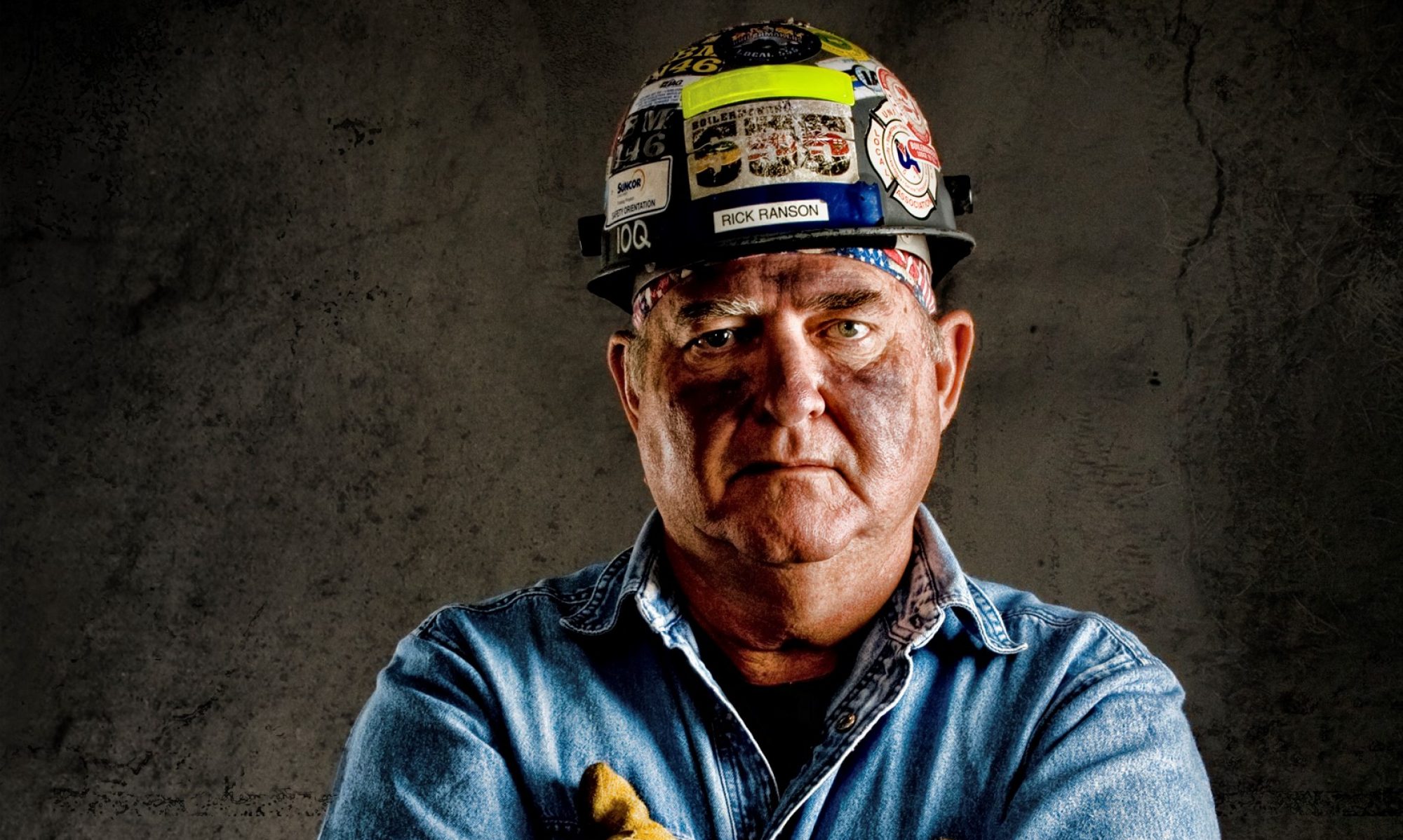
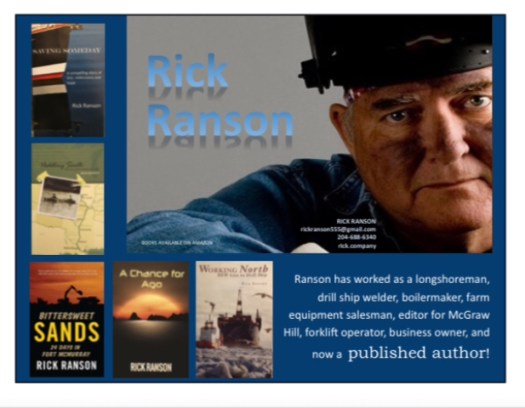
 Rick Ranson